
Build a Website That Clearly Explains What You Do
And Help Customers Take Action
Schedule a call with Fountinaweb to discuss a clear, customer-focused website structure designed to help visitors quickly understand your business and confidently take the next step.
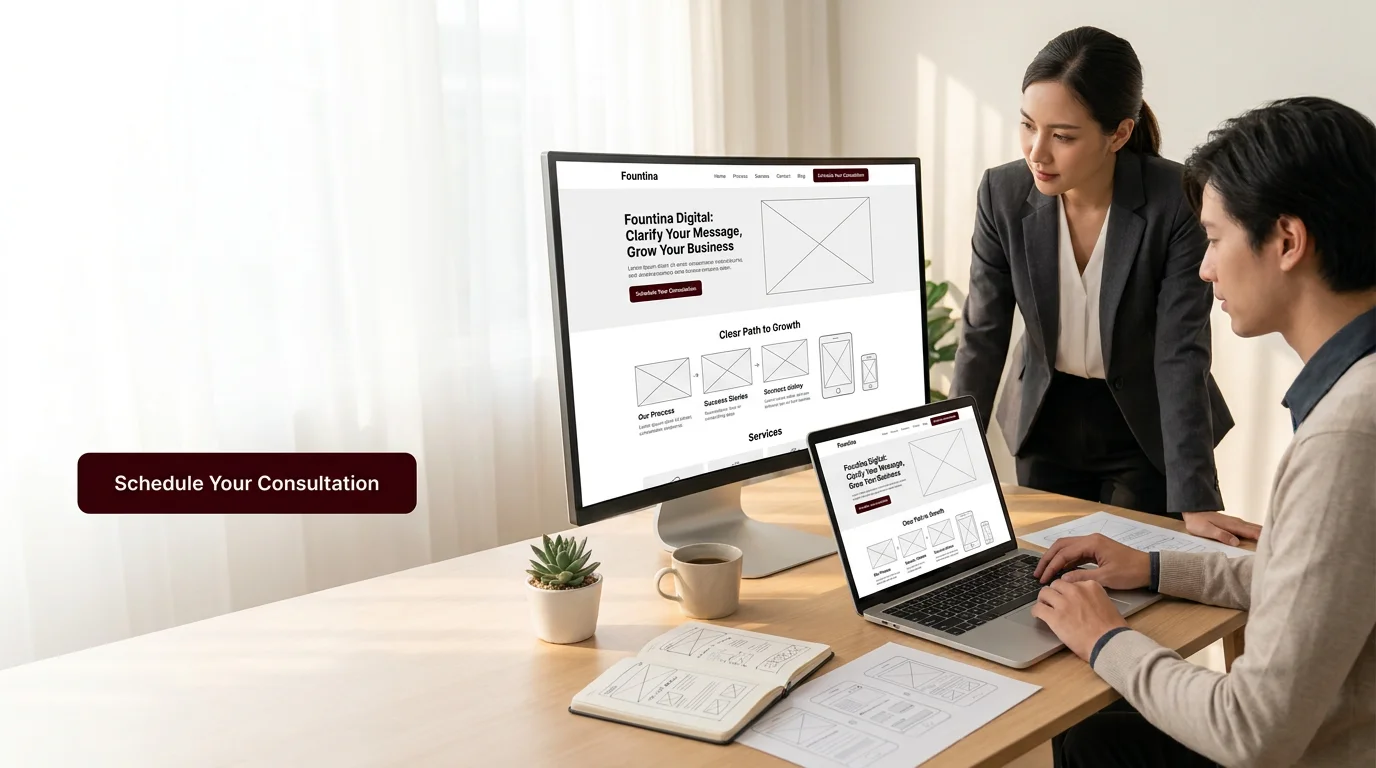
Most Websites Lose Visitors Within Seconds
Many business websites fail because visitors cannot quickly understand:
What Do You Do?
Visitors should understand what your business offers within seconds. Clear messaging helps people quickly see how you can help them.
Who Is It For?
Your website should immediately show who you help so customers feel they are in the right place and continue exploring.
Why Should They Trust You?
A clean, professional, and well-structured website helps build confidence and makes your business feel more credible.
What Should They Do Next?
Strong calls to action guide visitors toward the next step — whether that is contacting you, booking a call, or requesting a quote.
When the message is unclear, visitors leave.
Download The Website Clarity Checklist™
Discover 15 essential elements every business website should include to reduce confusion, build trust, and generate more leads. This free checklist helps you quickly evaluate whether your website clearly explains what you do and what visitors should do next.
Website Clarity Checklist
Design Before Development
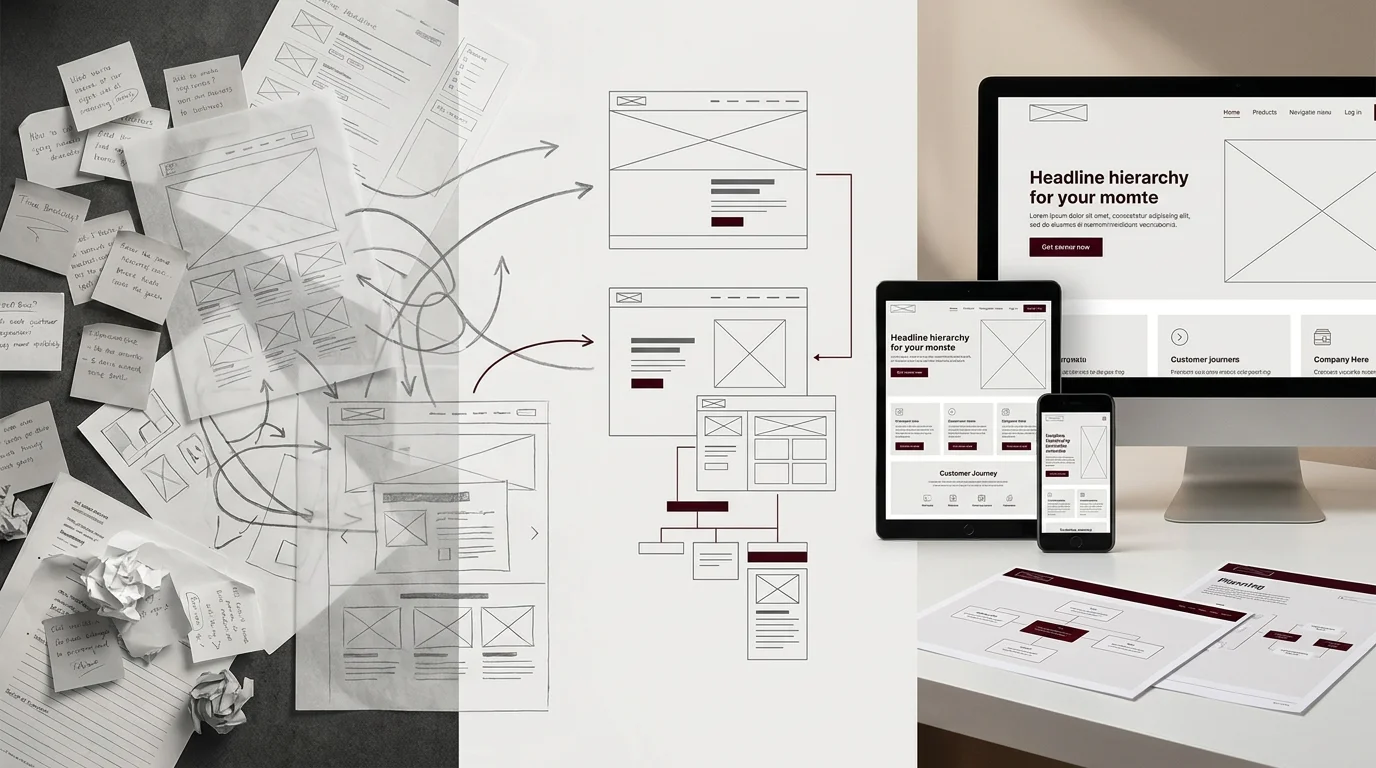
Fountina Web focuses on planning clear, customer-focused websites before development begins.
Every project starts with:
- messaging clarity
- website structure
- page flow
- calls-to-action
- customer journey planning
- wireframing
This creates a clear blueprint before coding starts.
A Website Should Reflect The Business Clearly
Before wireframing begins, Fountina Digital works closely with you to understand your business, customers, messaging, goals, and customer journey.
This process helps create a website structure that truly represents your business and guides visitors clearly toward action.
Understanding The Customer
Fountina Wen identify:
- who your ideal customer is
- what problems they face
- what they truly want
- how your business helps them
- This creates the foundation for clear messaging and website structure.
SAMPLE QUESTIONS
- Who is your ideal customer?
- What problem are they trying to solve?
- What results do customers want?
- How does your business help?
Structuring The Customer Journey
Fountina Web define:
- website flow
- visitor actions
- lead generation opportunities
- calls-to-action
- conversion structure
SAMPLE QUESTIONS
- What should visitors do next?
- What is your process?
- What successful outcome does your customer experience?
What free resource can you offer?
Designing The Website Experience
We shape the visual and structural direction of the website to match your business goals and customer expectations.
SAMPLE QUESTIONS
- What tone should your brand communicate?
- What style inspires you?
- What pages are required?
- What should be avoided?
Fountina Digital will guide you through the process and help you complete the responses using examples tailored to your business and industry.
You are not expected to have everything prepared in advance.
The goal is not just to build a website.
The goal is to create a website that helps people quickly and confidently understand your business and take action.
How The Process Works?
Under The Business
We identify:
- customer problems
- goals
- messaging
- offers
- business priorities
Create The Website Wireframe
We design:
- homepage structure
- page hierarchy
- layout flow
- calls-to-action
- lead generation flow
Build Or Hand Off the Wireframe
You can:
- use your own developer
OR
- request full website development support through Fountina Web.
What Your Website Can Include:
- Home Page: Clear introduction to your business and offer.
- About Page: Build trust and explain your story clearly.
- Services Pages: Structured breakdown of products or services.
- Landing Pages: Focused pages designed for conversion goals.
- Lead Generation Forms: Capture enquiries and customer interest.
- Booking Systems: Allow visitors to schedule appointments.
- Portfolio Or Gallery: Showcase projects visually and professionally.
- Blog Setup: Share updates, insights, and improve visibility.
- Mobile Optimization: Designed for phones, tablets, and desktop.
- Basic SEO Setup: Help search engines understand your website.
- Social Media Integration: Connect your website with online platforms.
- Legal Pages: Terms of Use, Privacy Policy, and Disclaimer setup.
Wireframes
A Website Blueprint Before Development Begins
Why wireframes matter?
- Wireframing helps:
- reduce costly revisions
- improve communication
- organize content clearly
- simplify development
- improve customer flow
- create better clarity
If it doesn’t sell, it isn’t creative.
— David Ogilvy – Father of Advertising.
A website should not only look professional — it should help visitors quickly understand what your business does, why it matters, and what they should do next. When people understand your message clearly, they are more likely to trust your business, stay engaged, and take action.
What is Wireframing?
Wireframing is like the blueprint an architect draws before building a house.
Before any walls go up or paint is chosen, the architect sketches out where the rooms will be, where the doors and windows go, and how you move from one space to another. Nobody worries about wall colours or furniture at this stage — it’s purely about structure and layout.
A wireframe does the exact same thing for a website. It’s a simple, black-and-white sketch (usually on screen) that maps out where things will sit on a page — the menu, the buttons, the text, the images — before anyone writes a single line of code or picks a colour.
Why it matters?
Just like you wouldn’t want a builder to start pouring concrete before the architect’s plan is approved, you don’t want developers building a website before the layout is agreed on. Catching a problem on paper (or a simple sketch) is cheap and quick. Catching it after the walls are up — or after the website is coded — is expensive and painful.Wireframing saves time, money, and avoids a lot of “wait, this isn’t what I imagined” conversations later.
This Is What a Wireframe Looks Like for a Real Business
Most clients have never seen a wireframe before they work with us.
This sample — built for a healthcare provider — shows how structure, messaging, and customer journey are resolved before a single line of code is written.
Every section has a purpose. Every word earns its place.
PS: This sample wireframe is created to demonstrate the website planning, messaging, and structure process. Although we use the term “wireframe,” this is actually a detailed website mockup that includes real website-style text and content intended for use in the final website — unless changes are requested by the website owner. The example shown uses fictional business details for illustration purposes. Final wireframes are customized to your actual business, content, and goals, and the finished website may continue to evolve during the design and development process.
Ready to see what this process looks like for your business? Request a Website Estimate →